
Wimbledon prize money up 20% following players' media protest over Grand Slam revenue split at French Open
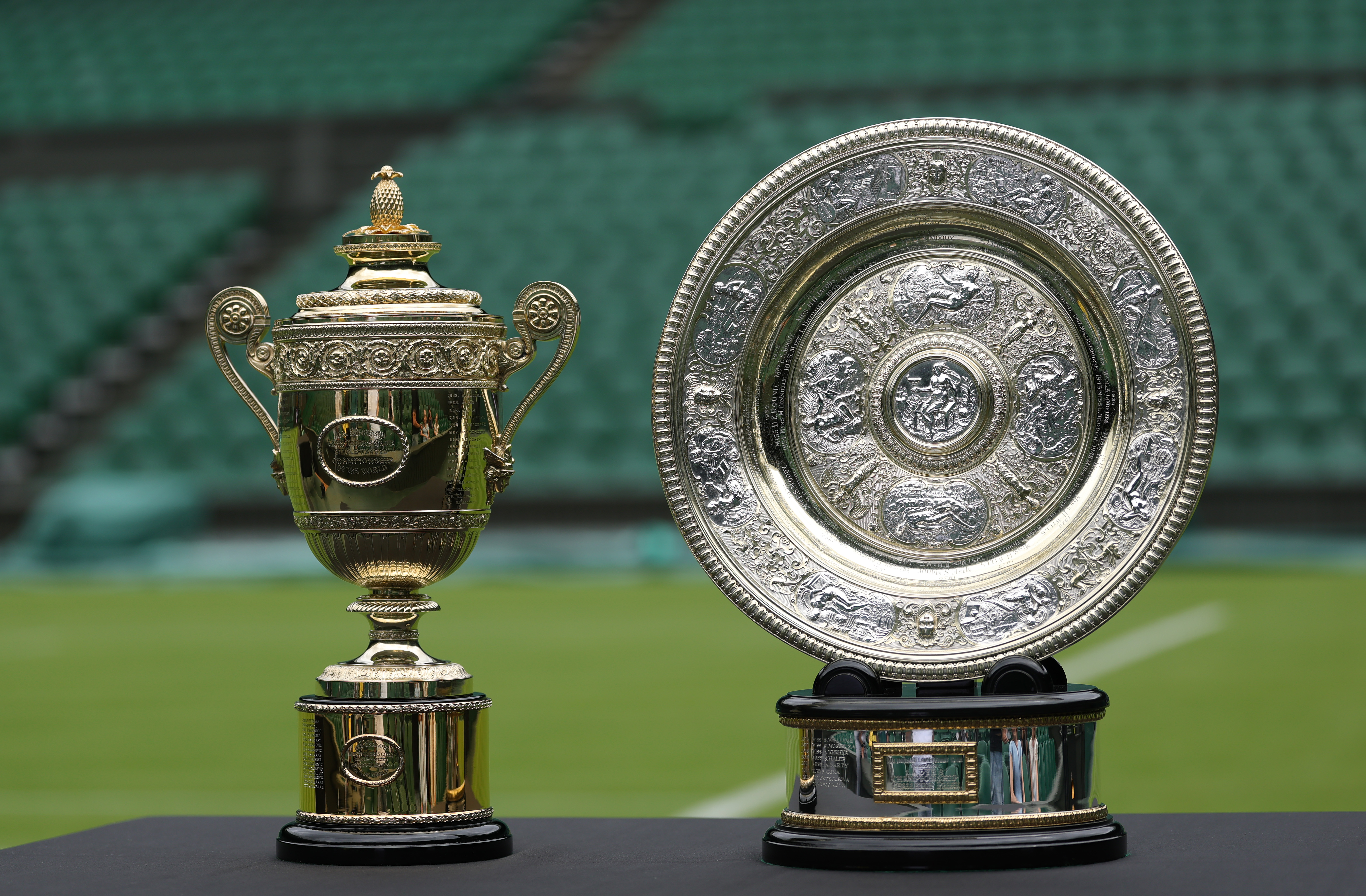
About three weeks after some of tennis' biggest stars staged a symbolic media protest at the French Open over what they believe is a disproportionate Grand Slam revenue split, Wimbledon, the next major on the calendar, announced a 20% increase in prize money for the 2026 iteration of the tournament.
Wimbledon, famously played at the All England Lawn Tennis and Croquet Club in London, will reward each of its singles champions $4.8 million this year. The total prize money will be $85.8 million, which the grass-court tourney described in its Thursday news release as "by far the biggest annual increase in the history of the event."
That said, as reported by The Athletic, the prize pool still falls short of the revenue percentage several tennis players are looking for from the Grand Slams. The players have been pushing for their earnings to make up 22% of Grand Slam prize money, a share that's akin to what they garner in joint ATP and WTA Tour events.
2026 Soccer Pick 'Em with FOX One: The group stage is here, make your picks now!
But the $85.8 million Wimbledon is allocating to its players this year reportedly amounts to only 15.1% of the tournament's 2025 revenue. For reference, per The Athletic, last year's prize pool was $72.7 million, and that accounted for 13% of Wimbledon's 2024 revenue.
So both the prize money and the revenue split are going up at the major, but the latter still doesn't yield the share players desire at Grand Slams.
"I would hope the players would welcome it. It's a significant amount of money," All England Club chair Deborah Jevans said at a news conference, according to The Associated Press.
"We've demonstrated that we've looked at every round, including qualifying. My hope is that the players do recognize what a significant increase that this is."
Players who bow out of the first round at Wimbledon this year will come away with $107,000, a 21% increase, according to the tournament, which also revealed that its qualifying rounds are experiencing a 25% bump in prize money.
The players' media protest at the French Open saw a group of standouts — including Jannik Sinner, Aryna Sabalenka, Coco Gauff and Iga Świątek — make themselves available for just 15 minutes during the customary pre-tournament media day at Roland-Garros. That 15 minutes represented the 15% of revenue, on average, Grand Slams dedicate to prize money, as previously reported by The Guardian.
But the protest didn't bleed into the tournament in Paris after a reportedly encouraging meeting between player representative Larry Scott (a former ATP Tour player and former WTA chief executive), a group of player agents and French Tennis Federation officials.
As the tournament at Roland-Garros wore on, additional meetings took place, including talks with Jevans, who, per the AP, said the players, via Scott, angled for a pot of $95 million at this year's Wimbledon.
It's important to note, though, that Wimbledon has a profit-share agreement with the Lawn Tennis Association (LTA). The LTA is Britain's governing body for tennis and padel, and it strives to enhance sport participation, court renovation and player development, in addition to piloting other grass-court tournaments. It's granted 90% of Wimbledon's annual financial surplus.
"Using revenue to determine prize money, it makes no sense," Jevans said Thursday, according to The Athletic.
"We have said that to Larry Scott. Revenue does not take into account the investment that we give. And as I've spoken about, we're not for profit, we're very different to a 1000 event (tournaments at the level below Grand Slams). Everything goes back in the sport. I am frustrated that that message hasn't got across."
Jevans continued, per The Athletic: "But we have constant dialogue with Larry in this regard, and we're hoping that that message will get across for the players to understand the investment back into the game that is so very important and that allows us to be sustainable and will be in the future. That is a dialogue we welcome and why we have encouraged them to form with us a player council.
"Then we can have that dialogue. And that dialogue will include, when you think about player compensation, pension, maternity cover, all of those things, we would welcome the opportunity to sit down and talk with them about that. And that offer is on the table."
* This article was originally published here

